Get $500 Off Before October 31st!
Redirect Water With French Drain Installation Services in Cincinnati, OH, and the Tri-State Area
Standing water in your yard can be more than an inconvenience. Poor grading, dense soil, and slow drainage can allow rainwater to collect in low areas and keep the ground around your foundation saturated. When water has nowhere to go, soggy landscaping, erosion, muddy areas, and excess moisture near the home can continue long after a storm ends. Repeated saturation near the foundation can also contribute to lower-level water concerns. Correcting the problem requires understanding how water travels across and beneath the property rather than simply filling low spots.
Polaris Basements provides French drain installation services for Cincinnati, OH, and the Tri-State homeowners dealing with persistent exterior drainage problems. We evaluate landscape grading, surface flow patterns, soil absorption, and the location of problem areas before planning a drainage route. If water accumulation outside the home is contributing to moisture inside the lower level, a basement drainage system may also be evaluated as a separate solution. Our French drain systems use properly pitched trenches, filter fabric, perforated piping, and clean drainage stone to collect water and redirect it toward a more appropriate discharge area.
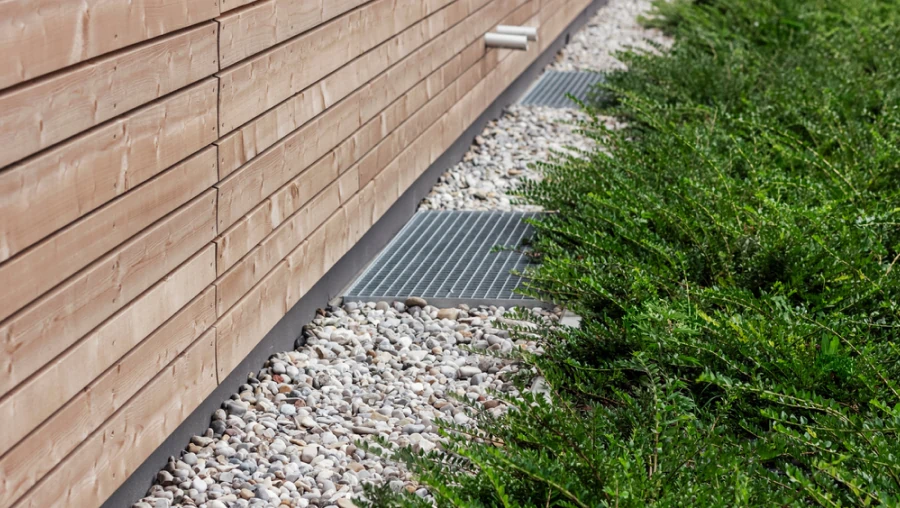
Give Yard Water a Controlled Path Away
A French drain is a buried drainage channel designed to intercept surface and subsurface water as it moves through saturated ground. Rather than allowing water to remain in low areas or migrate toward the home, the system provides a defined path that carries it down-gradient.
Effective French drain installation starts with understanding the property. We examine elevation, grading, soil conditions, water flow, and potential discharge areas before determining the route and pitch of the system.
- Drainage Evaluation: We identify where water collects, how it moves across the property, and which grading or soil conditions may be contributing to persistent saturation.
- Proper Trench Pitch: The drainage route is excavated with the necessary slope to encourage collected water to move toward the planned discharge location.
- Filter Fabric Installation: Geotextile fabric helps separate surrounding soil from the drainage stone and piping while allowing water to enter the system.
- Perforated Drainage Pipe: Perforated piping collects subsurface water along the drainage route and carries it away from saturated areas.
- Clean Drainage Stone: The pipe is surrounded with drainage aggregate that provides open space for water movement while supporting the buried system.
When groundwater pressure is concentrated directly around the foundation rather than across the yard, foundation drainage installation may provide a more appropriate approach for managing water along the building perimeter.
Correct Drainage Before Saturation Reaches Your Home
Water naturally follows elevation and the path of least resistance. When a property has poor slope, compacted soil, or low areas, rainfall may remain trapped instead of moving away efficiently. The longer the ground remains saturated, the greater the opportunity for water to migrate toward foundation walls and other vulnerable areas.
A properly planned exterior drainage system helps change that path. By intercepting water and moving it toward a controlled outlet, a French drain can help reduce standing water in affected yard areas and limit prolonged soil saturation. The route, depth, slope, and discharge location all need to be planned around the individual property for the system to function as intended.
Polaris Basements brings 25+ years of local housing, real estate, renovation, and construction experience to properties throughout Cincinnati, OH, and the Tri-State Area. Our whole-house background helps us understand the connection between exterior drainage and conditions inside the home. If water is already reaching the basement through a specific foundation opening, foundation crack repair may be considered separately for suitable cracks.
Our proprietary mobile bidding technology also helps make project planning straightforward. During the property visit, we evaluate the drainage problem, establish the proposed route, enter project specifications, and prepare a detailed, itemized proposal. You receive clear information about the recommended scope and pricing without waiting through a lengthy estimating process.
If puddles, soggy ground, or recurring saturation are keeping areas around your home wet after storms, Polaris Basements provides French drain installation services in Cincinnati, OH, designed to collect and redirect unwanted water. Contact us to arrange a drainage inspection and receive a detailed proposal.

Get Fast Help With a Wet Basement
Water in your basement? Contact our local team 24/7 to discuss the problem and next steps. We offer a 5 Year warranty on waterproofing!
Frequently Asked Questions About French Drain Installation
-
A French drain collects surface and subsurface water through a stone-filled trench containing perforated drainage pipe. The system provides water with a controlled route away from saturated areas rather than allowing it to remain trapped in the surrounding soil.
-
Persistent puddles, soggy ground, slow-draining soil, erosion, and recurring saturation near the home can indicate an exterior drainage problem. We evaluate grading, water flow, and soil conditions to determine whether a French drain is appropriate.
-
The appropriate discharge location depends on the property’s elevation, drainage conditions, and project layout. The system is pitched so collected water moves toward a planned outlet rather than remaining in the problem area or being released directly beside the foundation.
-
It can help when exterior surface or subsurface water is contributing to saturated soil near the home. However, basement water can have several causes, including hydrostatic pressure, cracks, and below-slab groundwater. We evaluate the overall water pattern before determining which drainage solution is appropriate.
-
Installation generally involves excavating a pitched trench, lining it with geotextile filter fabric, placing perforated drainage pipe in clean stone, and restoring the surface above the system. The exact route and configuration depend on the property’s drainage conditions.