Get $500 Off Before October 31st!
Install an Effective Basement Drainage System in Cincinnati, OH, and the Tri-State Area
Recurring basement moisture can be a sign that water is collecting around or beneath your foundation. Saturated soil, poor drainage, changing groundwater levels, and hydrostatic pressure can push moisture toward foundation walls and floor joints. The result may be damp surfaces, standing water, elevated humidity, or repeated leaks after heavy rain. Cleaning up the water only addresses what has already entered the basement. Without a reliable drainage path, the same conditions can return whenever the surrounding ground becomes saturated.
Polaris Basements installs basement drainage systems for Cincinnati, OH, and the Tri-State homeowners who need a dependable way to manage lower-level water. We evaluate property elevation, soil saturation, foundation conditions, water-entry patterns, and building mechanics before recommending a drainage approach. Depending on the property, drain tile installation may be used to capture groundwater along interior footings and direct it toward a controlled discharge point. Our goal is to identify how water is moving around the home and create a drainage solution designed around those conditions.
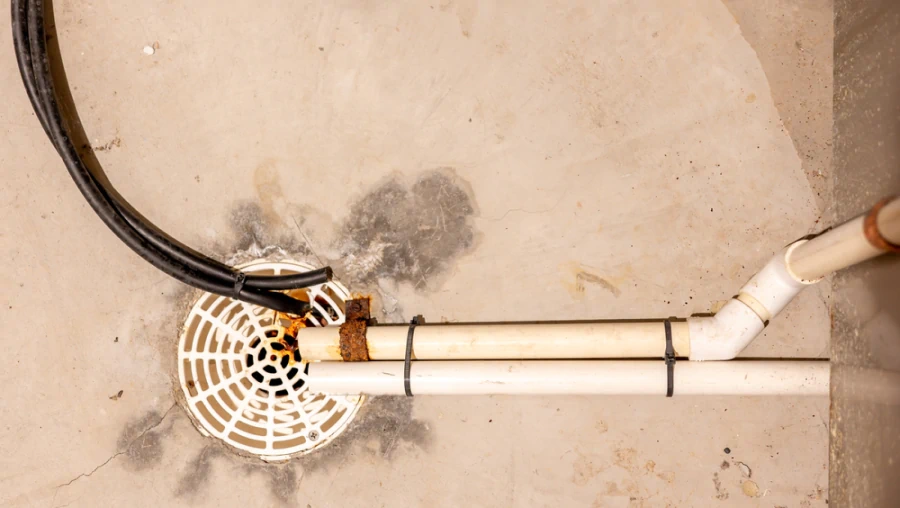
Protect Your Basement With a Working Drainage
A basement drainage system is designed to collect and redirect water before it remains trapped against foundation surfaces or spreads throughout the lower level. The right configuration depends on where the water originates, how it moves around the structure, and where it can be discharged safely.
We begin by inspecting the basement and surrounding property. Elevation, grading, soil saturation, foundation conditions, and existing drainage components all help determine the appropriate water-management plan.
- Water Migration Evaluation: We inspect where moisture appears and consider how groundwater, surface runoff, soil conditions, and foundation features may be contributing to the problem.
- Drainage System Planning: Collection channels and piping are designed around the property’s water patterns instead of applying the same configuration to every basement.
- Water Collection: Drainage components intercept migrating groundwater and provide a controlled route that limits water accumulation around lower-level surfaces.
- Controlled Conveyance: Collected water moves through dedicated piping toward an appropriate discharge point rather than remaining trapped beside the foundation.
- Whole-House Evaluation: We also consider exterior drainage and other building conditions that may contribute to basement moisture, helping identify issues beyond the visible water.
When collected groundwater needs to be actively lifted and discharged away from the structure, sump pump installation can provide the mechanical discharge point for the drainage network.
Prevent Costly Repairs From Basement Water Damage
Basement water does not always enter from one obvious location. Moisture can move through wall and floor joints, foundation openings, cracks, or saturated areas beneath the slab. During heavy rain, rising groundwater can increase pressure around the structure and expose weaknesses that remain dry during normal weather.
That is why we evaluate the overall water pattern before recommending a solution. A visible puddle may be the final symptom of a drainage issue occurring elsewhere around the home. Our whole-house perspective helps us look at soil conditions, elevation, foundation mechanics, exterior water movement, and the lower-level drainage system together.
When surface or subsurface water outside the home is contributing to saturated conditions near the foundation, French drain installation may help redirect water across affected exterior areas. Properties experiencing groundwater pressure around the entire foundation may instead require foundation drainage installation for broader perimeter water management.
Polaris Basements brings 25+ years of local housing, real estate, renovation, and construction experience to properties throughout Cincinnati, OH, and the Tri-State Area. We use that background to identify how water interacts with the entire building rather than focusing only on the location where moisture becomes visible.
Our proprietary mobile bidding system also simplifies project planning. During the property visit, we can enter project specifications and develop a detailed, itemized proposal based on the drainage solution recommended for your home. You receive clear scope and pricing information without waiting through a lengthy estimating process.
Qualifying basement waterproofing work includes a 5-year warranty. We will review applicable warranty details with you as part of the recommended project scope.
If groundwater, damp walls, or recurring lower-level water is making your basement difficult to use, Polaris Basements installs basement drainage systems in Cincinnati, OH, designed to redirect moisture and address the conditions affecting your property. Contact us to schedule an inspection and receive a detailed drainage proposal.
Get Fast Help With a Wet Basement
Water in your basement? Contact our local team 24/7 to discuss the problem and next steps. We offer a 5 Year warranty on waterproofing!
Frequently Asked Questions About Basement Drainage Systems
-
Basement water can be related to saturated soil, hydrostatic pressure, groundwater, poor exterior drainage, foundation openings, or several conditions working together. We inspect the property to determine how water is reaching the lower level before recommending a drainage solution.
-
A drainage system collects water and provides a controlled route toward an appropriate discharge point. The exact design depends on where the water is entering and the conditions around the foundation. Components can include collection channels, drainage piping, stone, and mechanical discharge equipment.
-
Not every property has the same drainage configuration. A sump pump is commonly used when collected groundwater needs to be mechanically lifted and discharged away from the structure. We evaluate elevation, water volume, drainage layout, and existing conditions before determining the appropriate setup.
-
Drainage is an important part of controlling water around a basement, while waterproofing can involve multiple methods for managing or blocking moisture. The appropriate approach depends on where water originates, how it reaches the structure, and the specific conditions affecting the home.
-
Qualifying basement waterproofing work is backed by a 5-year warranty. Applicable coverage depends on the work included in your project, and we will explain the relevant warranty details when reviewing the proposal.