Get $500 Off Before October 31st!
High-Tensile Carbon Fiber Wall Reinforcement in Cincinnati, OH, and the Tri-State Area
A basement wall that begins bowing, cracking, or shifting inward can signal increasing lateral pressure outside your foundation. Expanding soil, groundwater, and changing ground conditions can place significant force against masonry walls over time. As the pressure continues, small cracks or minor deflection may progress into more noticeable wall movement. Cosmetic patching cannot stop a wall that is actively being pushed inward, and delaying structural evaluation may allow the condition to worsen. Homeowners need to understand both the amount of movement and the forces causing it before selecting a repair.
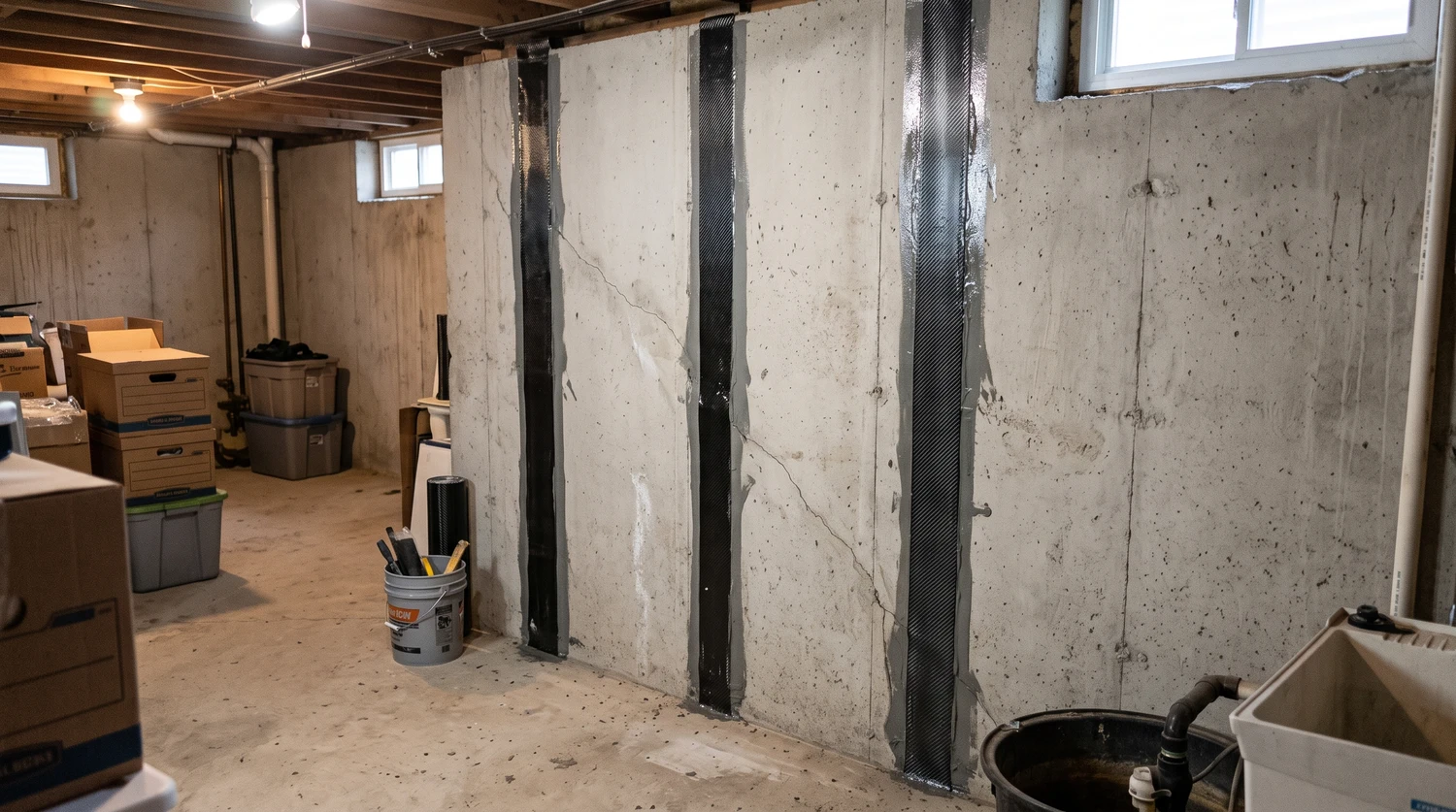
Polaris Basements provides carbon fiber wall reinforcement for Cincinnati, OH, and the Tri-State homeowners who need a low-profile method for stabilizing qualifying basement walls. We evaluate wall displacement, masonry conditions, structural forces, and surrounding property conditions before developing a reinforcement layout. If the wall problem is part of broader foundation movement or settlement, our foundation repair services can address those connected structural concerns. For suitable walls, high-strength carbon fiber straps are bonded directly to the interior masonry surface using structural epoxy. Once cured, the system helps resist continued inward movement without requiring a large structural rebuild.
Reinforce Bowing Walls Without a Major Rebuild
Carbon fiber foundation repair uses high-tensile reinforcement to strengthen masonry walls affected by lateral pressure. Because the straps are installed directly against the wall surface, the system maintains much of the existing interior space while adding structural resistance. The first step is determining whether the amount and type of wall movement make carbon fiber an appropriate repair method.
We inspect the affected wall along with cracking patterns, displacement, surrounding soil conditions, and other structural factors. The reinforcement layout is then developed around the forces affecting the wall. When cracks are also allowing water into the basement, foundation crack repair may be used to address suitable openings separately from the structural reinforcement.
- Wall Movement Evaluation: We assess visible bowing, cracking, deflection, and surrounding structural conditions to determine whether carbon fiber reinforcement is appropriate for the affected basement wall.
- Reinforcement Layout: Carbon fiber straps are positioned strategically across the wall based on its dimensions and areas of movement, creating a reinforcement pattern designed around the structural conditions present.
- Structural Epoxy Bonding: High-strength carbon fiber material is bonded directly to the prepared masonry surface with structural epoxy, creating a strong connection between the reinforcement and wall.
- Low-Profile Installation: The thin reinforcement system adds structural support without occupying substantial basement floor space or requiring bulky support components throughout the room.
- Continued Movement Resistance: Once installed and cured, the reinforcement helps distribute lateral forces across the wall surface and resist additional inward deflection.
Carbon fiber foundation repair can provide a practical solution for qualifying bowed basement walls, but the method must match the structural condition. Severe movement, settlement, footing problems, or other forms of structural distress may require a different repair strategy.
Protect Your Foundation With Carbon Fiber Walls
A bowing basement wall is often the result of forces acting outside the structure. Saturated or expanding soil can push laterally against foundation masonry, and repeated pressure can gradually move the wall inward. Cracks may become more visible as displacement increases, while doors, floors, or other parts of the home may eventually show signs of related structural movement. Correcting the wall without considering contributing site conditions can leave important causes unaddressed.
Our whole-house approach helps us evaluate those connected conditions. We look at wall movement, foundation mechanics, water patterns, soil conditions, and drainage when assessing the property. If excess groundwater is increasing pressure around the foundation, foundation drainage installation may be considered as a separate water-management solution. This allows structural reinforcement and drainage concerns to be addressed according to their individual roles in the problem.
Polaris Basements brings 25+ years of local housing, renovation, and construction experience to homes throughout Cincinnati, OH, and the Tri-State Area. During the initial property visit, our proprietary mobile bidding system helps us develop a detailed scope and itemized proposal based on the conditions we identify. Homeowners receive clear project information without waiting weeks for a separate estimate.
If your basement wall is bowing, cracking, or visibly moving inward, an inspection can help determine whether reinforcement is appropriate before displacement progresses. Polaris Basements provides carbon fiber wall reinforcement in Cincinnati, OH, designed to stabilize qualifying masonry walls and resist continued inward movement. Contact us to arrange an inspection and receive a detailed repair proposal.

Get Fast Help With a Wet Basement
Water in your basement? Contact our local team 24/7 to discuss the problem and next steps. We offer a 5 Year warranty on waterproofing!
Frequently Asked Questions About Carbon Fiber Wall Reinforcement
-
Lateral pressure from surrounding soil is a common contributor to basement wall movement. Saturated soil, expanding ground conditions, drainage problems, and other exterior forces can place pressure against masonry walls. We evaluate the wall and surrounding property conditions to identify factors associated with the movement.
-
High-strength carbon fiber straps are bonded directly to the prepared masonry wall using structural epoxy. Once the system cures, the reinforcement helps distribute lateral loads across the wall surface and resist continued inward movement while maintaining a low-profile installation.
-
Carbon fiber reinforcement is primarily intended to stabilize qualifying walls and resist additional movement. The appropriate repair depends on the amount of displacement and overall structural condition. We inspect the wall first to determine whether reinforcement is suitable or another structural repair method should be considered.
-
No. Wall displacement, cracking patterns, structural conditions, and the forces affecting the foundation all influence the repair method. More severe movement or foundation settlement may require another form of structural stabilization, so we evaluate the property before recommending carbon fiber reinforcement.
-
Carbon fiber straps have a low-profile design and bond directly to the interior wall surface. This allows the system to reinforce qualifying basement walls without installing bulky supports that occupy significant floor space, making it particularly useful where maintaining usable basement dimensions is important.